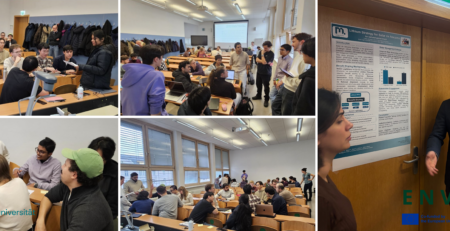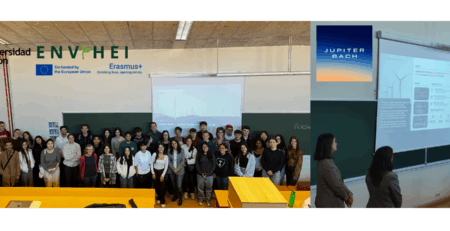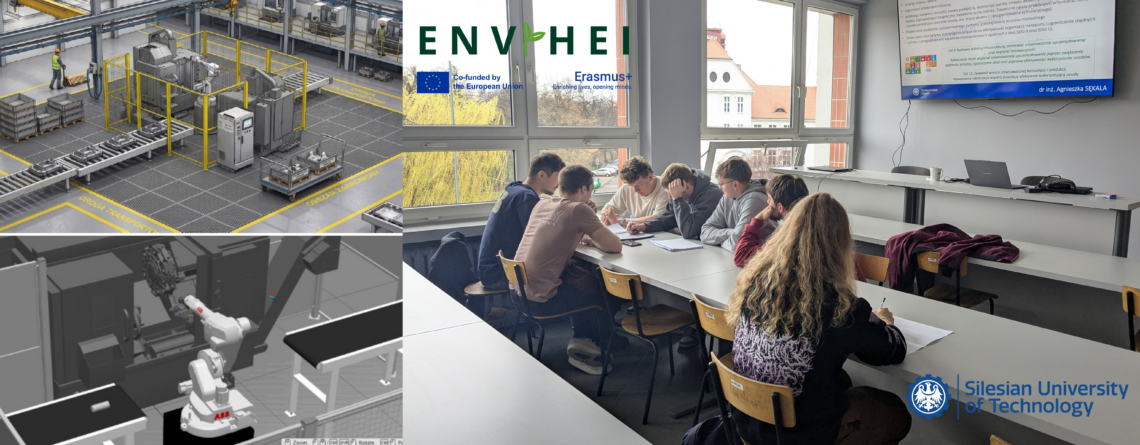
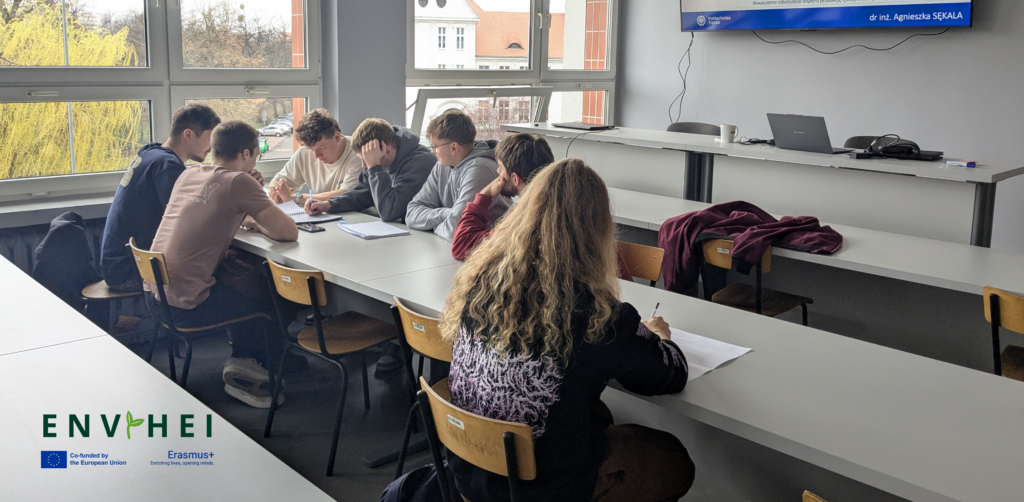
🚀 As part of the ENVIHEI pilot implementation phase, 55 students from Silesian University of Technology (SUT), enrolled in the 3rd year of the Bachelor’s Degree in Industrial Automation and Robotics, participated in an 8-week Project/Problem-Based Learning (PBL) experience within the Robotics in Transport Systems course during the spring semester of 2026. The activity was coordinated by Agnieszka Sękala and Krzysztof Foit.
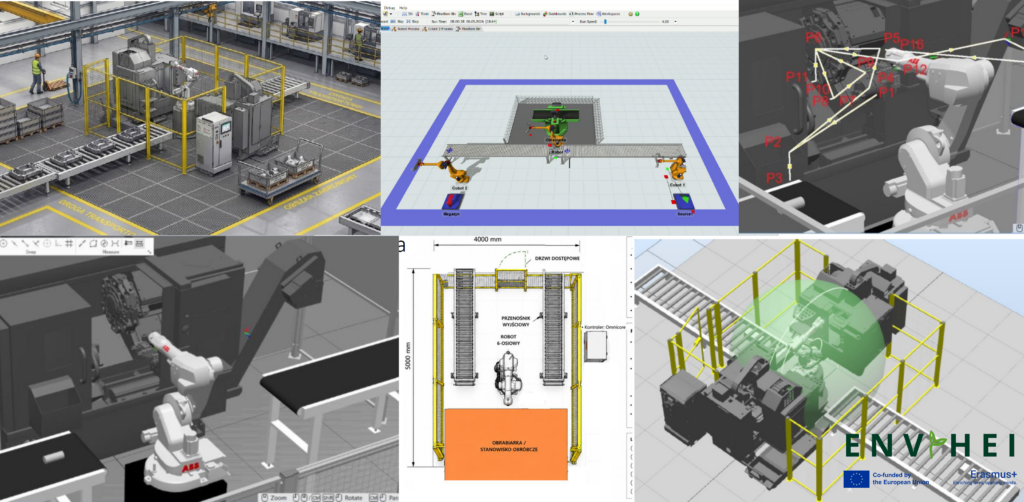
🤖 Working in 12 project teams, students were challenged to design automated manufacturing systems capable of replacing manual material handling operations with robotic solutions. Their projects focused on transporting components between storage areas and CNC machining stations, exploring applications involving machine shafts, brake discs, pins, and other industrial parts. Students selected industrial robots and equipment, designed workstation layouts, defined robotic trajectories, and compared alternative configurations using engineering design and simulation tools.
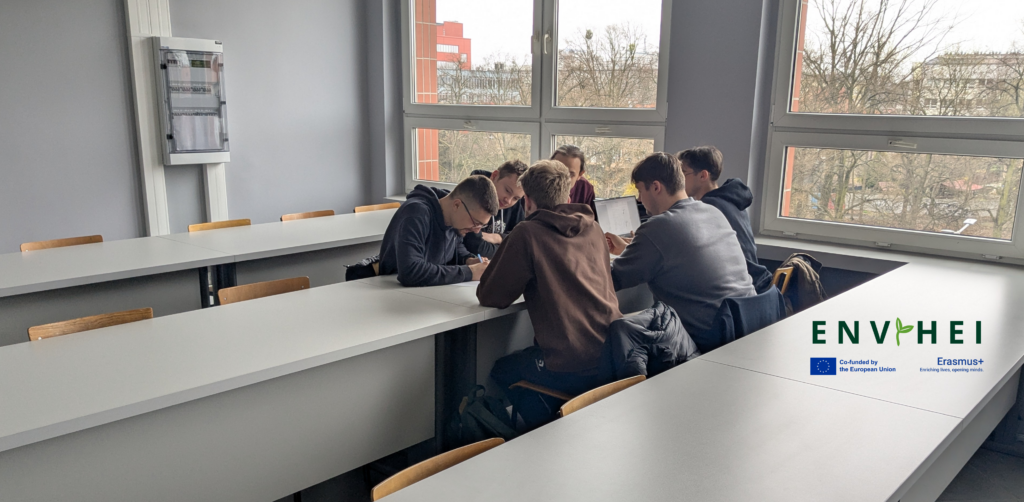
🌱 Sustainability was integrated throughout the projects, encouraging students to evaluate their proposed solutions not only in terms of productivity and technical feasibility, but also by considering energy consumption, unnecessary robot movements, resource efficiency, and environmental impact. The activities explored the relationship between industrial innovation and responsible production, particularly in connection with Sustainable Development Goals (SDGs) 9 and 12.
💡 Using tools such as ABB RobotStudio, FlexSim, Siemens NX, and Autodesk Inventor, students developed and visualised different robotic manufacturing concepts. One team demonstrated how optimising robot trajectories could reduce simulated energy consumption per production cycle from approximately 2,000 J to 1,590 J, highlighting the importance of considering environmental performance alongside technical efficiency. The resulting projects combined technical calculations, workstation designs, simulation models, and sustainability assessments.
🤝 Beyond technical knowledge, the experience strengthened students’ teamwork, project management, communication, and decision-making skills. Through collaborative work, the distribution of responsibilities, and final project presentations, students gained practical experience in developing and justifying engineering solutions while considering their technical, environmental, and social implications.
📚 This ENVIHEI pilot implementation highlighted the potential of Project/Problem-Based Learning to integrate sustainability into robotics and industrial engineering education, encouraging future engineers to consider technological innovation, production efficiency, and environmental responsibility when designing modern manufacturing systems.
📬 Follow ENVIHEI for upcoming updates on our activities.
Discover more from ENVIHEI - Student-centered learning for ENVIronmental sustainability at Higher Education Institutions
Subscribe to get the latest posts sent to your email.