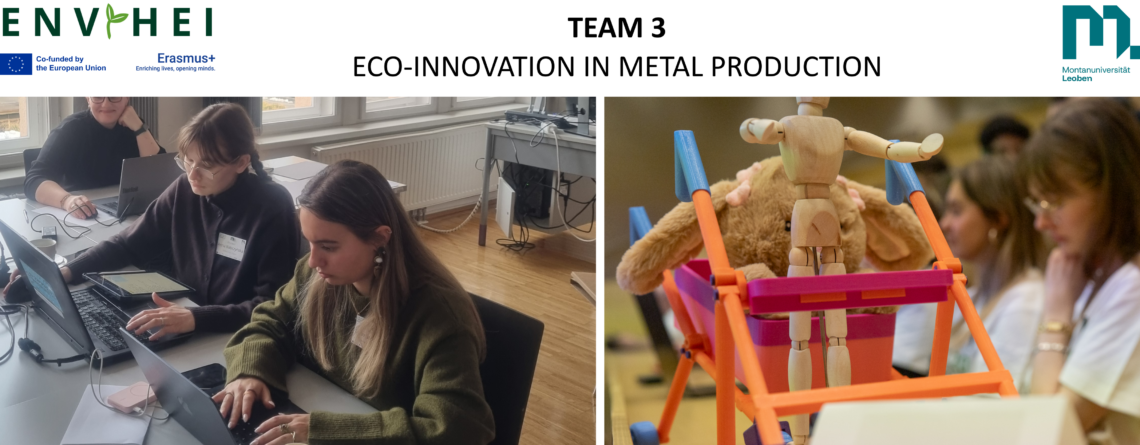
✨Today we introduce the third of the five teams that have participated in the ENVIHEI Winter School. All partners of the team worked intensively during the online phase, developing their ideas and components in parallel, and then brought everything together during the in-person activities in Leoben (Austria) from 23-27 February 2026, where the final results were consolidated and presented in the Final Presentation Session.
👥 Team Composition & Organisation
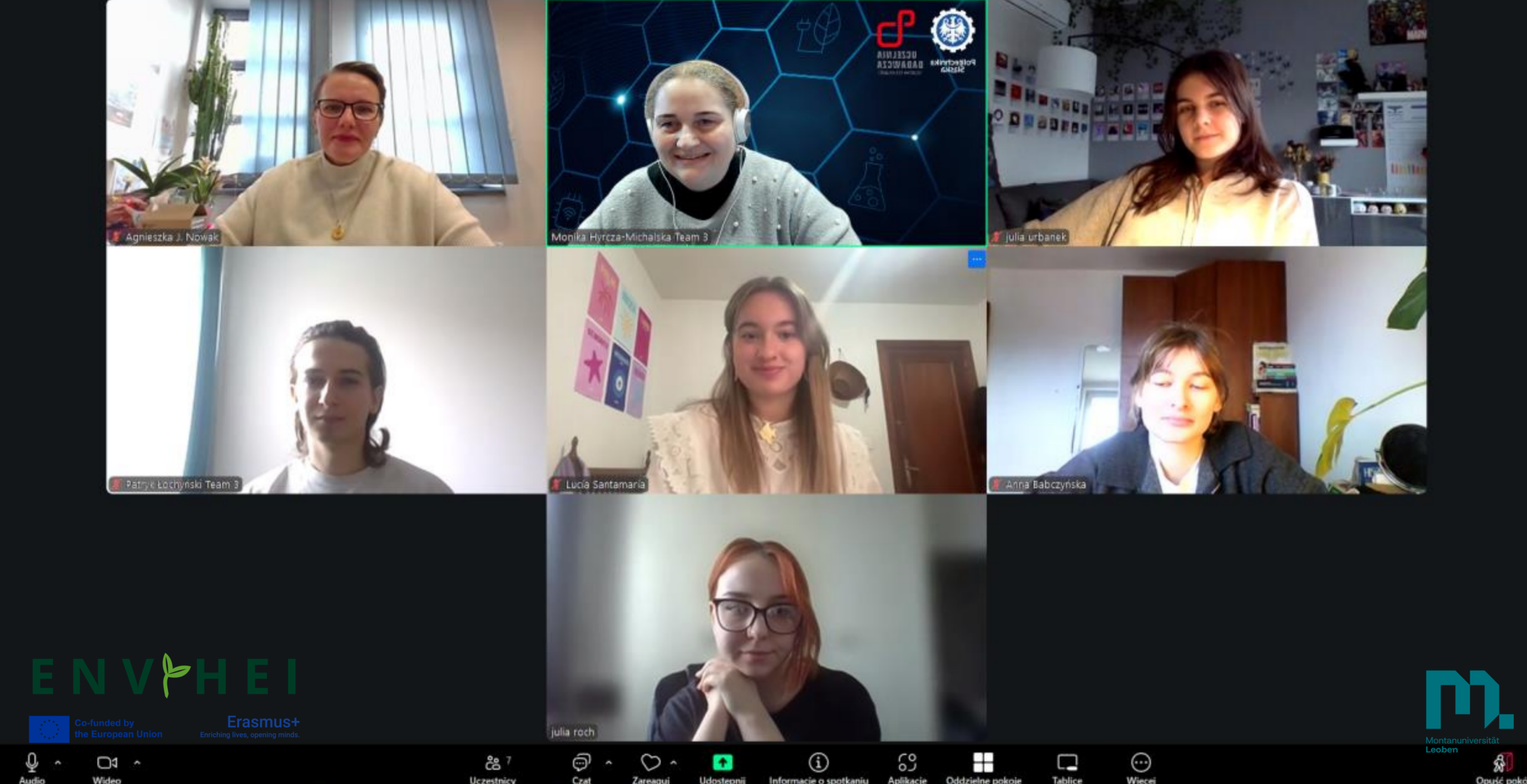
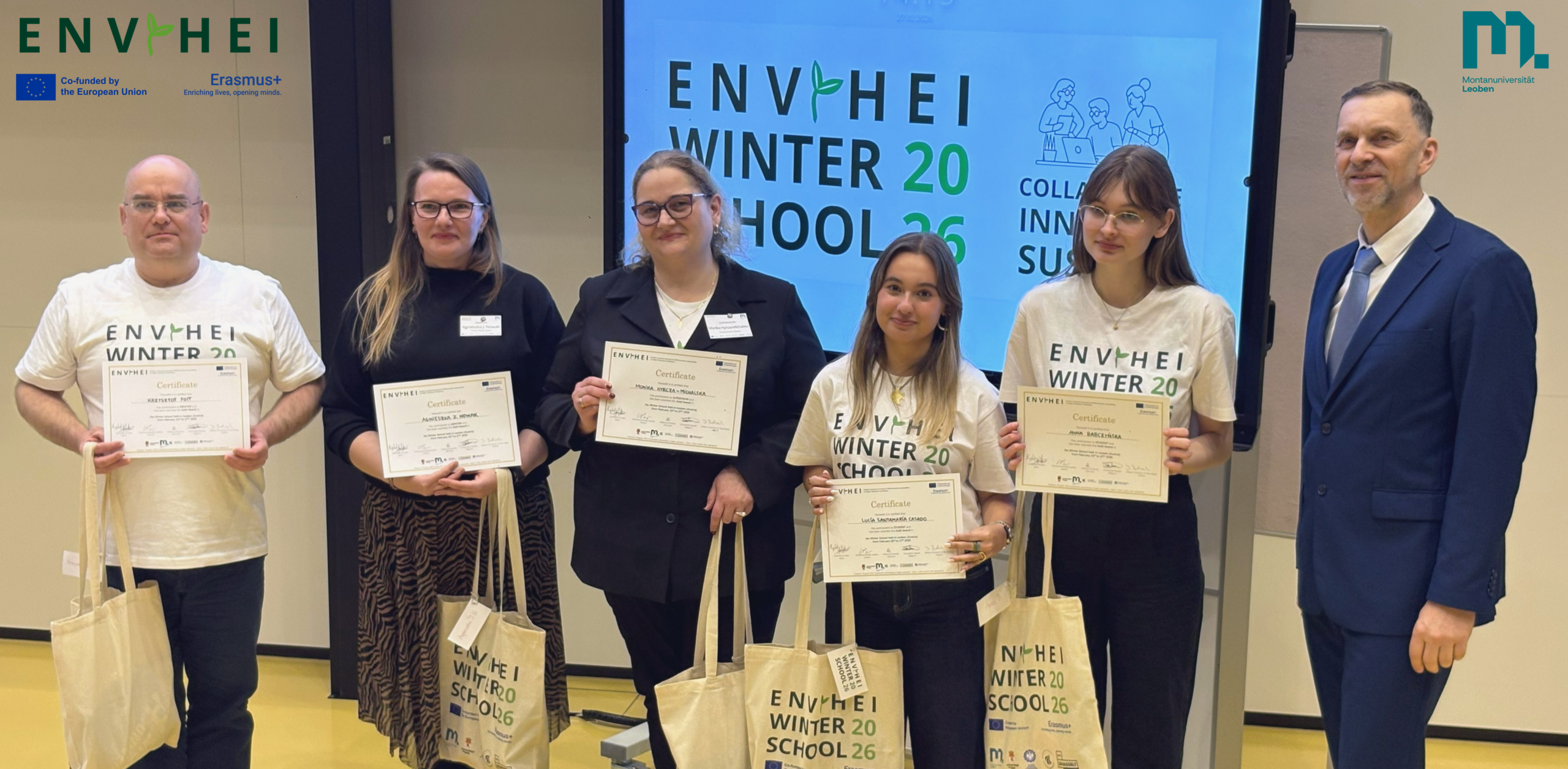
🎓 The team was supervised by Monika Hyrcza-Michalska (Silesian University of Technology), with mentoring support from Krzysztof Foit (Silesian University of Technology) and Agnieszka J. Nowak (Silesian University of Technology). The in-person student team included included Anna Babczyńska (Silesian University of Technology) and Lucía Santamaría Casado (University of León), while Julia Urbanek (Silesian University of Technology), Julia Roch (Silesian University of Technology), and Patryk Łochyński (Silesian University of Technology) participated online.
🤝 Bringing together complementary expertise in environmental sciences, architecture, and robotics and mechanics, the team adopted a truly interdisciplinary approach to address the project challenge.
🔎 Project overview
🛒 Team 3 has developed a Project-Based Learning (PBL) entitled “Seeking inspiration for eco-innovation (eco-materials and eco-technology) in the production of metallic materials”. The project focused on rethinking the design and production of everyday mobility products through eco-innovation in metallic materials and manufacturing technologies.
🎯The aim was to design a sustainable, adaptable and long-life mobility solution using eco-innovation principles in metallic materials engineering.
♻️The main sustainability challenge addressed was the high environmental impact of metallic material production and consumption across the product lifecycle.
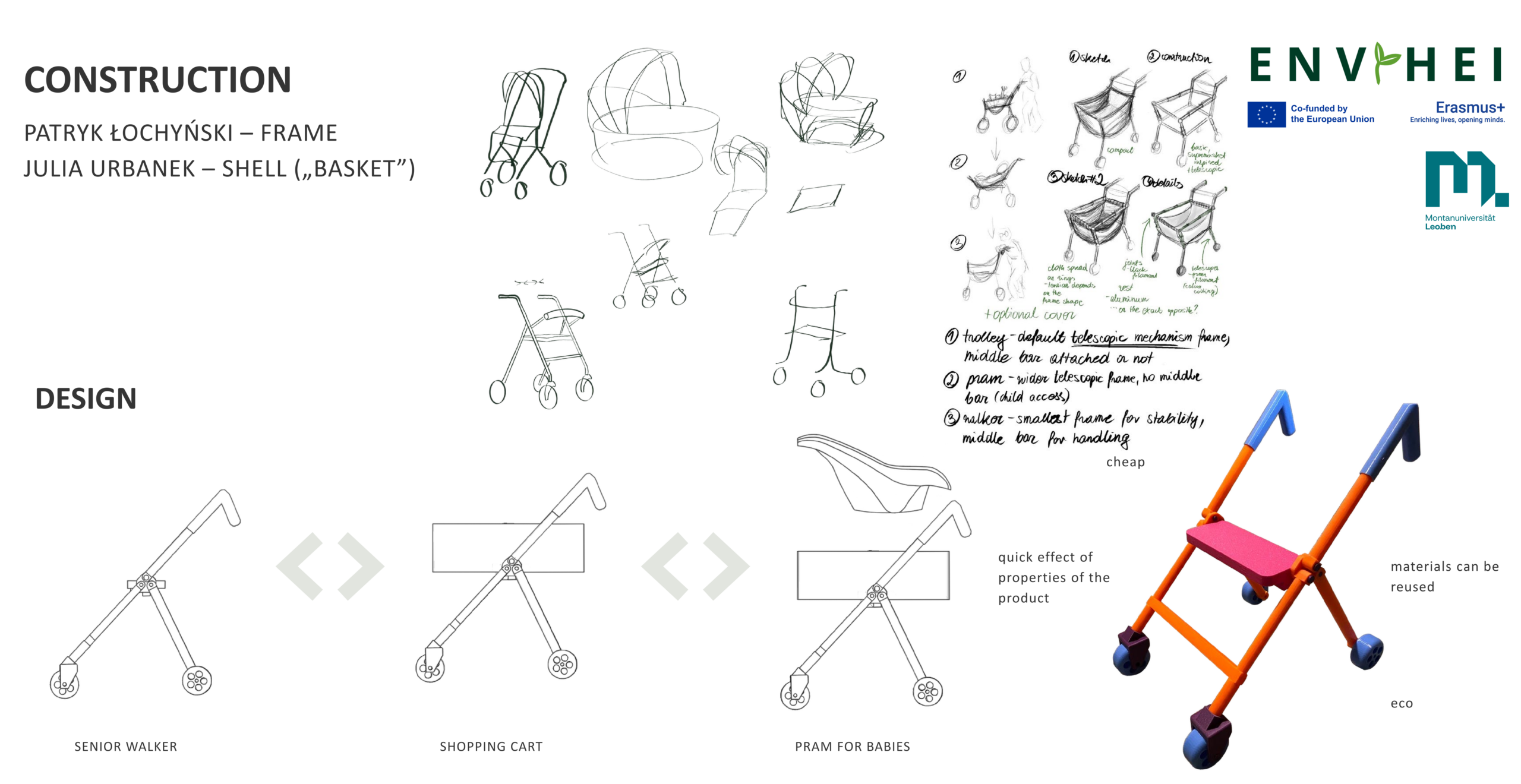
🛠️ Working through a structured research process, students analysed the materials and production methods typically used in the selected object, then explored alternative eco-materials and eco-technologies capable of improving environmental performance. The team collected and evaluated data, developed and refined potential innovations, and selected a final set of material and technological solutions. They assessed the proposed eco-innovations from technological, economic, and regulatory perspectives, ensuring alignment with EU and global standards for sustainable development. Finally, the students produced and 3D-printed a prototype to demonstrate and validate their final design solution.
🛒 The TFTF (Trolley For The Future) is a sustainable, multifunctional mobility system made from recycled aluminium, recycled stainless steel, recycled polyester, and natural silicone. Its modular design allows it to transform between a baby pram, shopping trolley, and senior mobility aid using interchangeable textile modules that ensure comfort and safety. Built for durability, repairability, and long-term use, the system reduces waste and supports circular, eco-friendly mobility.
🧠 Expert Collaboration in Leoben
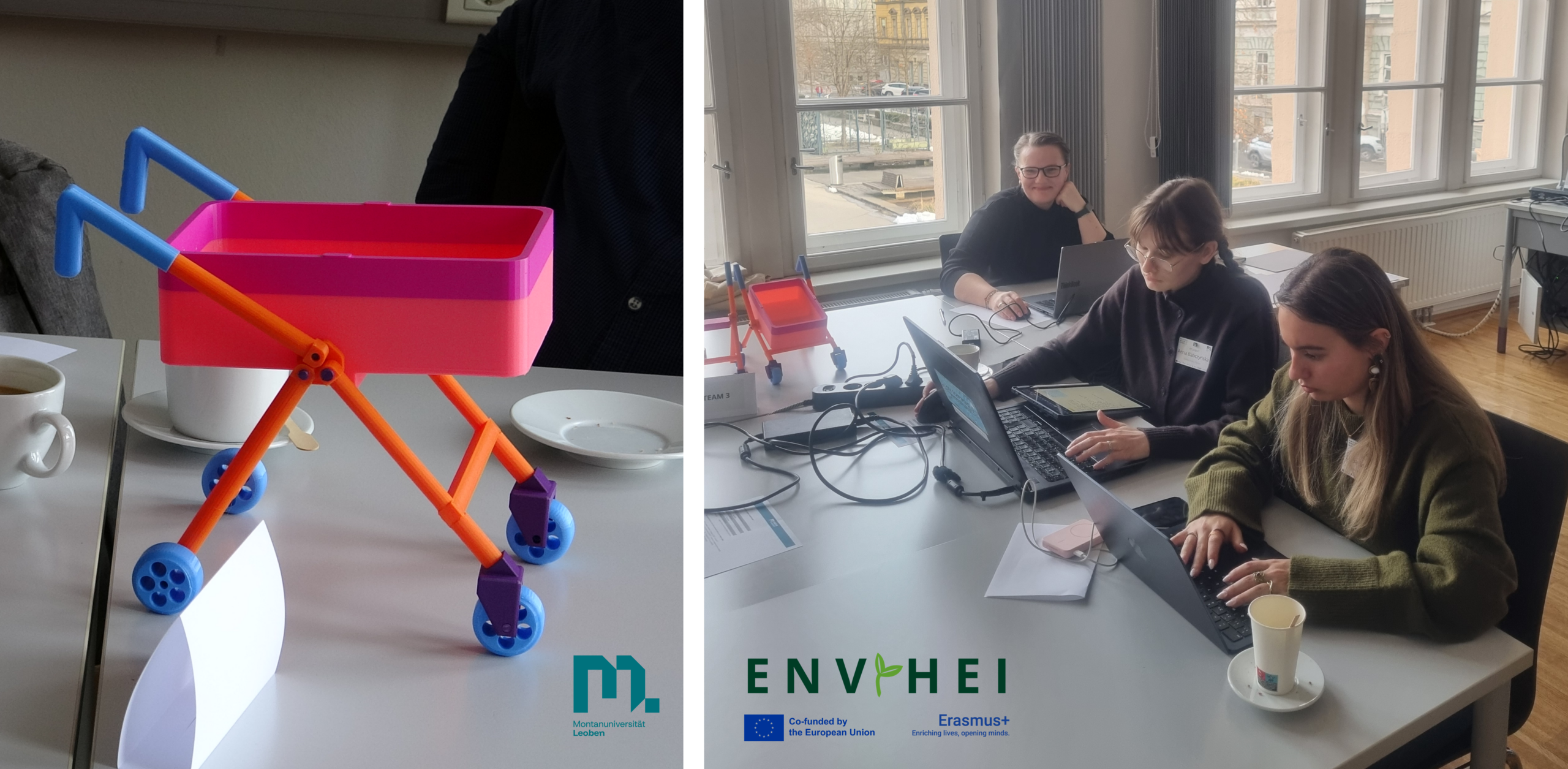
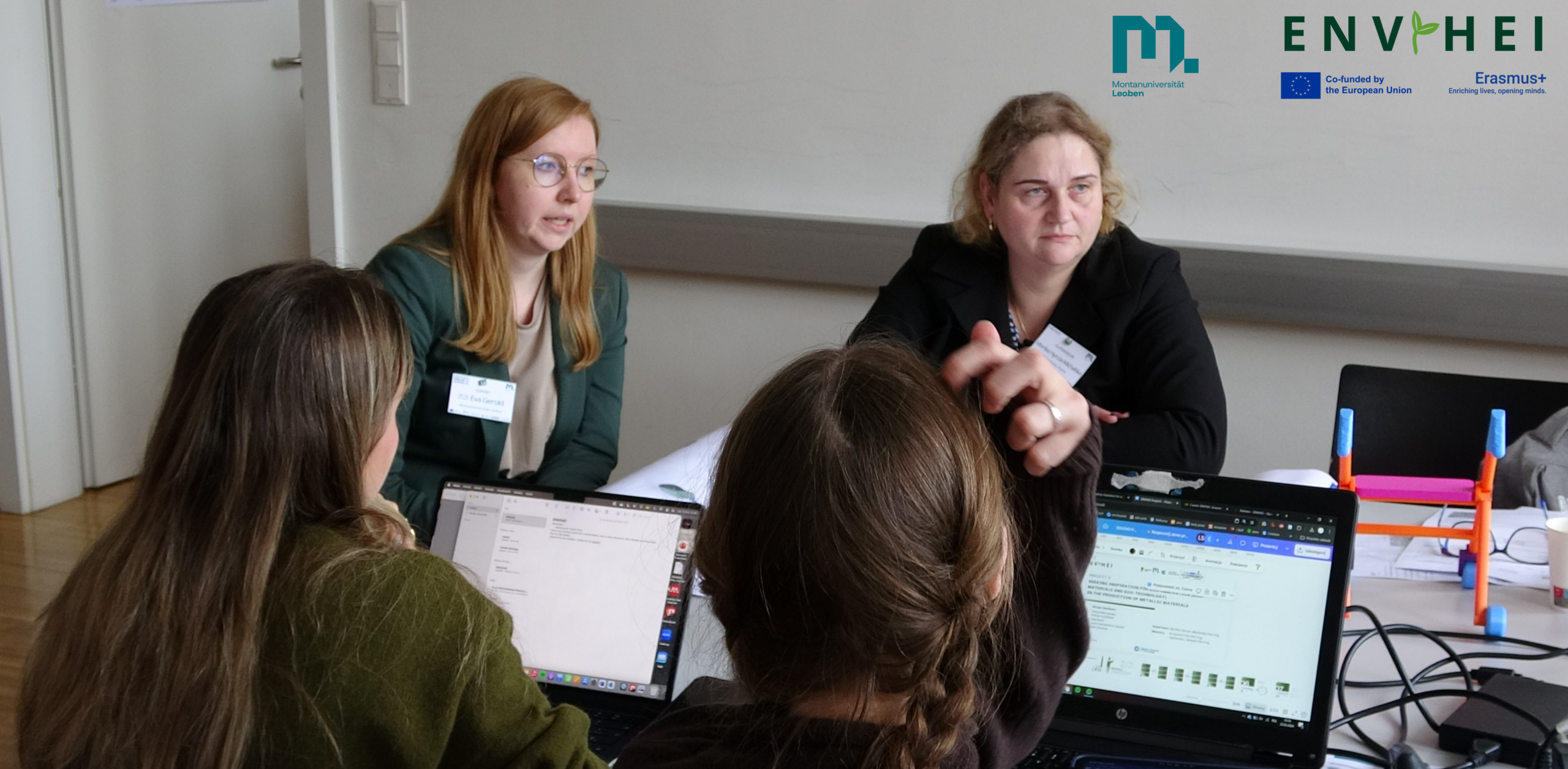
Expert contributions were provided during the in-person sessions and feedback workshops by Ass.-Prof. Dipl.-Ing. Dr.mont. Eva Gerold (Chair of Nonferrous Metallurgy, Montanuniversität Leoben). Her expertise helped the team better understand the environmental impact and industrial use of non-ferrous metals, especially aluminium, and guided them in selecting recyclable materials and appropriate processing methods. Her feedback ensured the design aligned with real-world metallurgical requirements and circular economy principles, strengthening the technical and practical validity of the project.
🎤 Final presentation
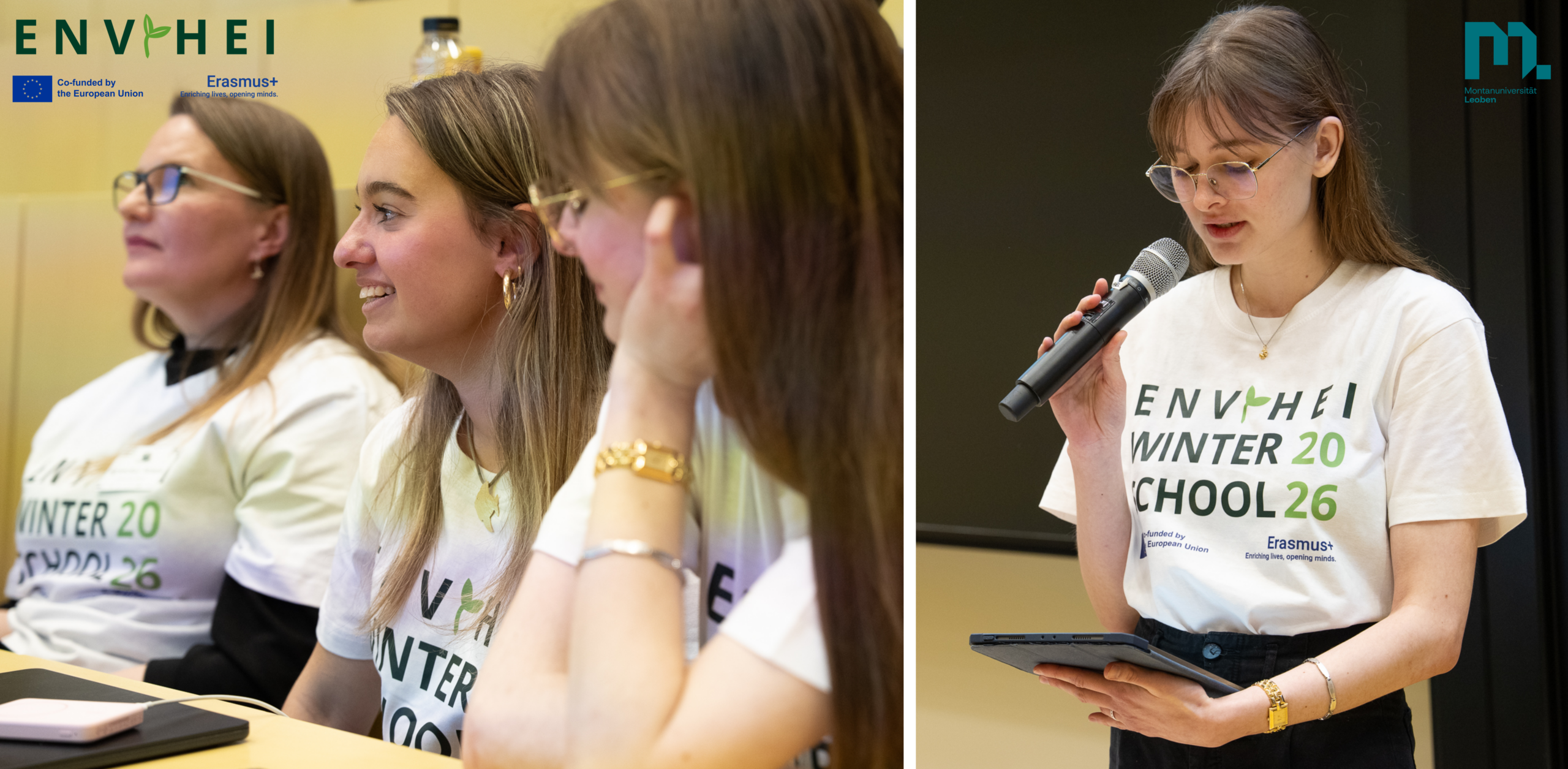
During the Final Presentation Session, the team presented a 3D-printed trolley prototype to the public, demonstrating its three configurations: baby pram, shopping trolley, and senior mobility aid. The demonstration highlighted its transformable, modular design, emphasizing extended product lifespan, reuse, and adaptability, while showing how it enables safe, ergonomic, and practical mobility for different user needs.
🏆 Award & Jury Feedback
The project was awarded the 🥉Gold Award in recognition of its successful integration of creativity and innovation across the entire life cycle, both from an individual perspective and in relation to materials and industrial processes. The jury highlighted the project’s strong ability to translate complex sustainability and eco-innovation concepts into a coherent and impactful design approach. Through its focus on recycled materials, modular construction, and product longevity, the team demonstrated a deep understanding of circular economy principles and their application in real-world engineering solutions, effectively bridging innovative thinking with sustainable industrial practice.
More information, photos, and insights about the projects developed during the Winter School will be shared soon. Stay tuned!
Discover more from ENVIHEI - Student-centered learning for ENVIronmental sustainability at Higher Education Institutions
Subscribe to get the latest posts sent to your email.